

Drinking Water Sources and Climate Change
Drinking water in the Martigny region
Background
In the Alpine regions, the climate is warming twice as fast as the global average. In addition to warming, climate projections for Switzerland point to a decrease in snowfall, earlier snowmelt, and significant changes in precipitation patterns.
These changes will result in a slight increase in water storage during the winter and a decrease during the summer, with more periods of drought that could lead to water shortages, especially toward the end of the summer.
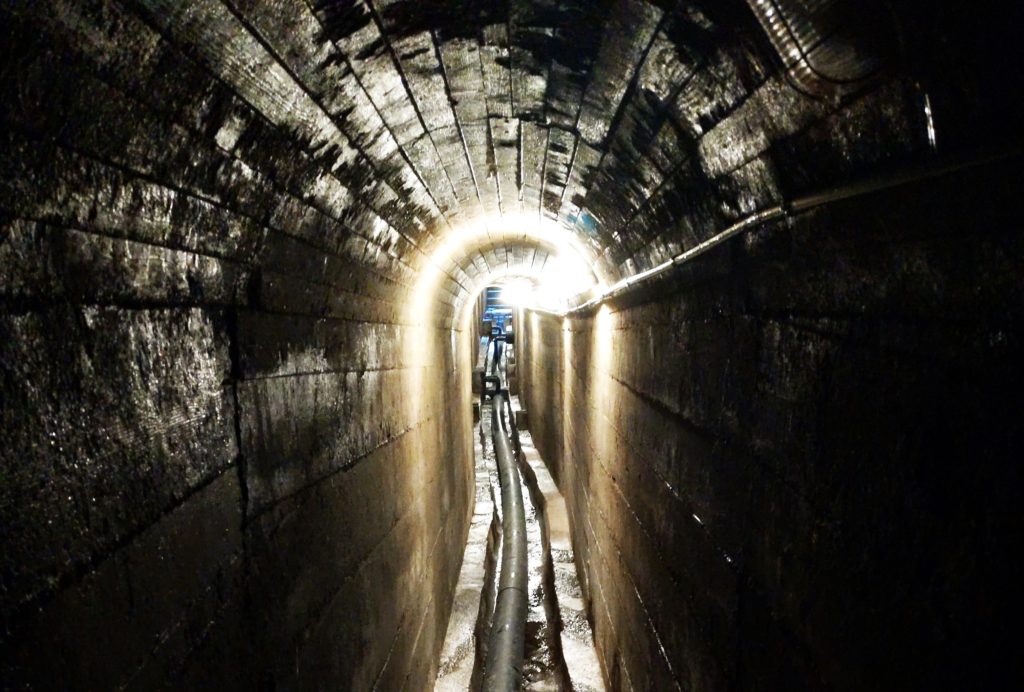
In Valais, the drinking water supply comes mainly from groundwater, particularly from springs—natural areas where groundwater resurfaces. How spring flow rates respond to these changes can vary greatly and depends primarily on the characteristics of the aquifers drained by these springs. Today, the status of exploited water resources remains poorly understood, hindering effective future planning, which itself depends on how water resources respond to climate change.
The project
The goal of the project is to characterize how these water sources function and thereby assess their vulnerability to climate change, with a view to sustainable and multifunctional water planning. This project stands out for its innovative nature, as it is based on a planning approach that has rarely been implemented due to the limited availability of suitable tools.
The project is based on a methodology developed as part of a previous study on the impact of climate change on the water sources of the municipality of Val de Bagnes (in collaboration with ALTIS, FOWA, and SSIGE). It consists of the main areas of focus described below.
Strategy for Quantitative Monitoring of the Resource
Sometimes, measurement involves quantifying the amount of water consumed by the population and the volume of water entering and leaving reservoirs. These measurements are not always suitable for quantifying the potential yield of water resources. Furthermore, water managers sometimes encounter measurement difficulties due to the dynamics of spring flow rates (high and low flows) and the specific technical characteristics of the catchment chambers. Thus, this first part aims to determine whether the existing measurements provide the data needed to model spring flow rates in order to identify the long-term effects of climate change and, if necessary, to propose measures to improve monitoring.
Indicators of drought vulnerability
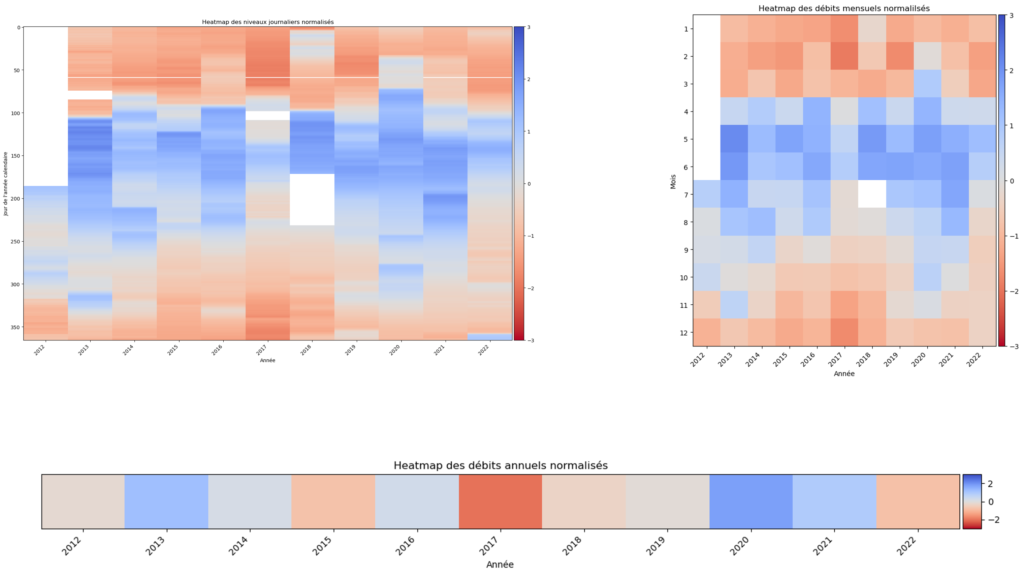
Several statistical indicators based on streamflow records and responses to climatic inputs can be calculated. These indicators provide a better understanding of the sensitivity of water sources and allow them to be classified according to their vulnerability to droughts.

Modeling future flow rates under various climate scenarios
CREALP has developed a new module to supplement the RS-MINERVE hydrological model, which is normally applied to rivers. To develop this set of additional reservoirs, which allows for a more accurate simulation of the specific aspects related to groundwater, CREALP has implemented certain concepts developed by the Bureau de Recherches Géologiques et Minières (BRGM), a leading French public agency specializing in hydrogeology.
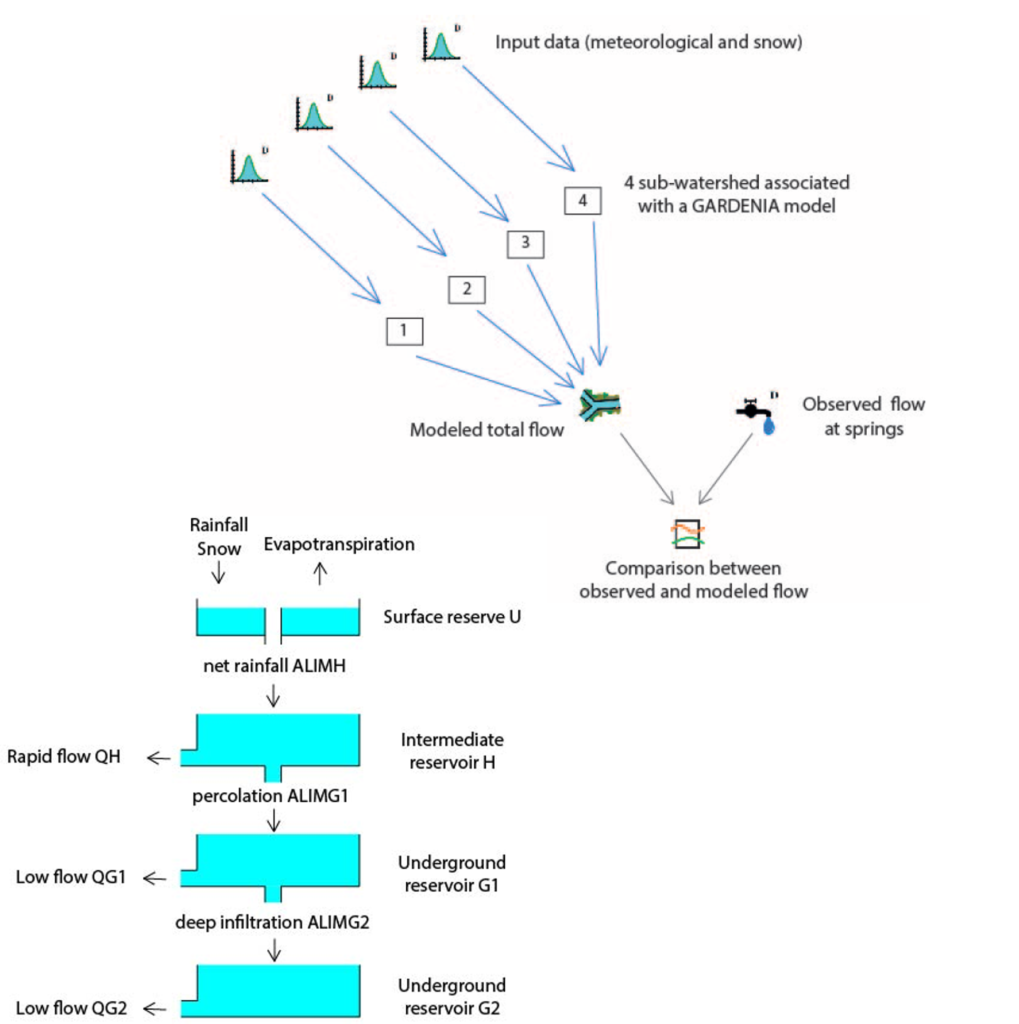
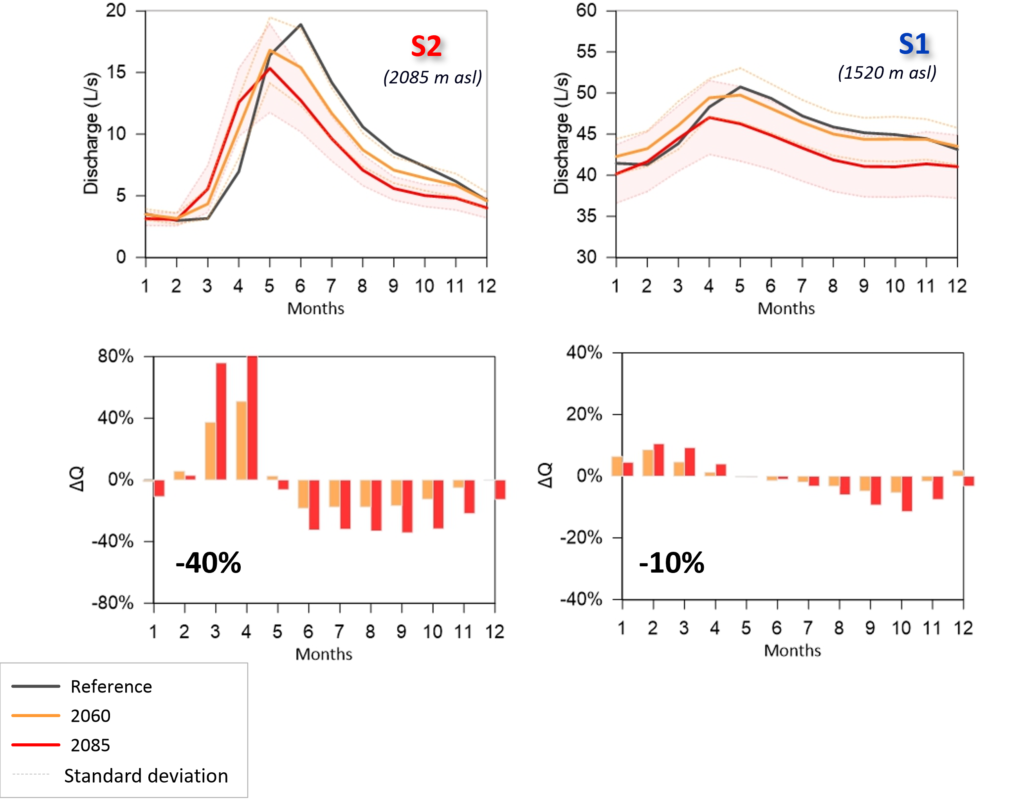
The flow rates of the springs are modeled using precipitation and temperature data from various climate scenarios, making it possible to identify the possible ranges of change in the flow rates of these springs by 2100.
Information
Project Manager:

MARIE ARNOUX
Responsable de filière Géoressources - Spécialiste en hydrogéologie
marie.arnoux@crealp.vs.ch
Project duration: 2023–2024
Supported by: the Alpiq Prize and Sinergy