
Climate change in the mountains
The impacts of climate change in mountain regions: water and natural hazards
Note: This page covers the basic concepts of hydrogeology and mountain hydrology, which are essential for understanding the effects of climate change on these environments. The links provided lead to educational display panels from the exhibition ‘Impacts of climate change in the mountains: water and natural hazards’, created in 2024 by CREALP. This exhibition presents current scientific knowledge and illustrates it with concrete examples from the Valais. Enjoy reading!
Mountain water
Mountain catchments contain various water reservoirs, both on the surface and underground. Water flows from these reservoirs at different rates, allowing it to be stored in the environment for varying lengths of time. Each type of natural reservoir stores a certain amount of water for a period of time specific to that reservoir. Some examples of these water reservoirs include:
- Rivers and lakes: water is visibly stored there in liquid form, for varying lengths of time
- Snow: water is stored at high altitudes during the winter and is released in spring and summer as the snow melts.
- Glaciers: water is stored there in the form of ice and is released only in summer after the snow has melted
- Groundwater: water found beneath the surface is groundwater, which circulates there all year round. This water is a particularly important reservoir, especially in mountainous areas.
But there are other reservoirs too… You can find more information here: A walk exploring the waterways of the Réchy valley
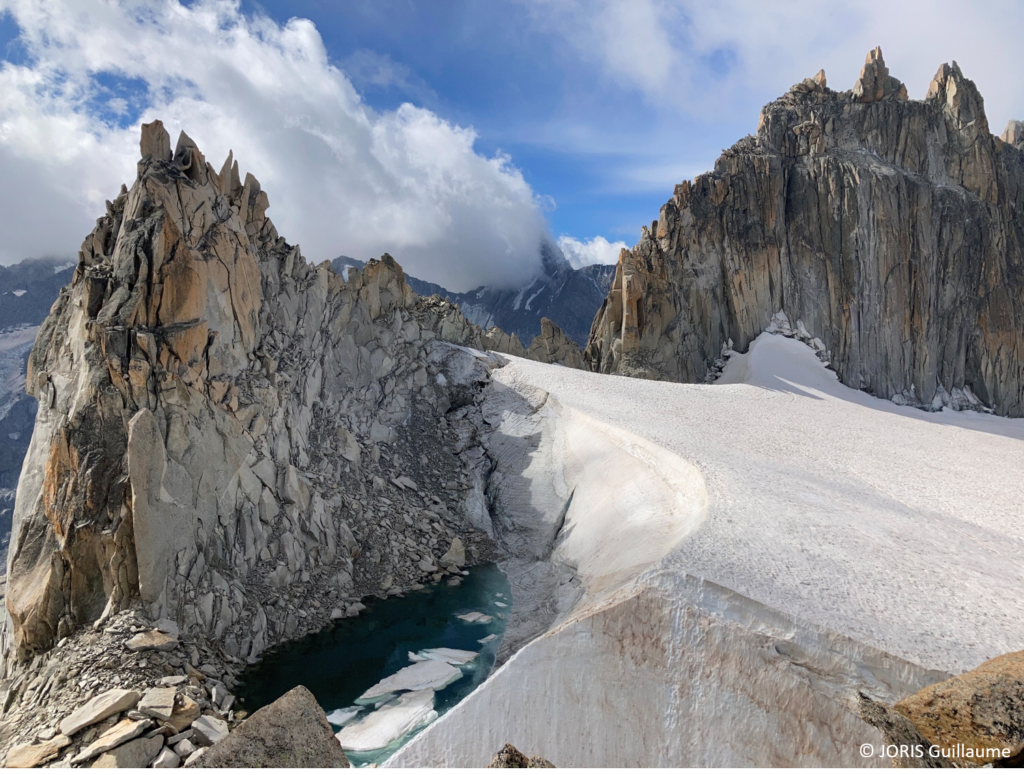
“It looks as though the sea ice and icebergs have moved into the Alps!”
Groundwater
Groundwater is invisible, except when it emerges at the surface (springs) or disappears underground (infiltration).
So how do we define groundwater?
The subsoil consists of rock containing spaces that are more or less interconnected, allowing water to flow through them. From a hydrogeological perspective, the subsoil can be divided into two main zones: the unsaturated zone, where the spaces are filled with both air and water, and the saturated zone (or aquifer), where the spaces are entirely filled with water. Depending on the local geological context, water flows through different types of aquifers: porous, fissured or karstic.
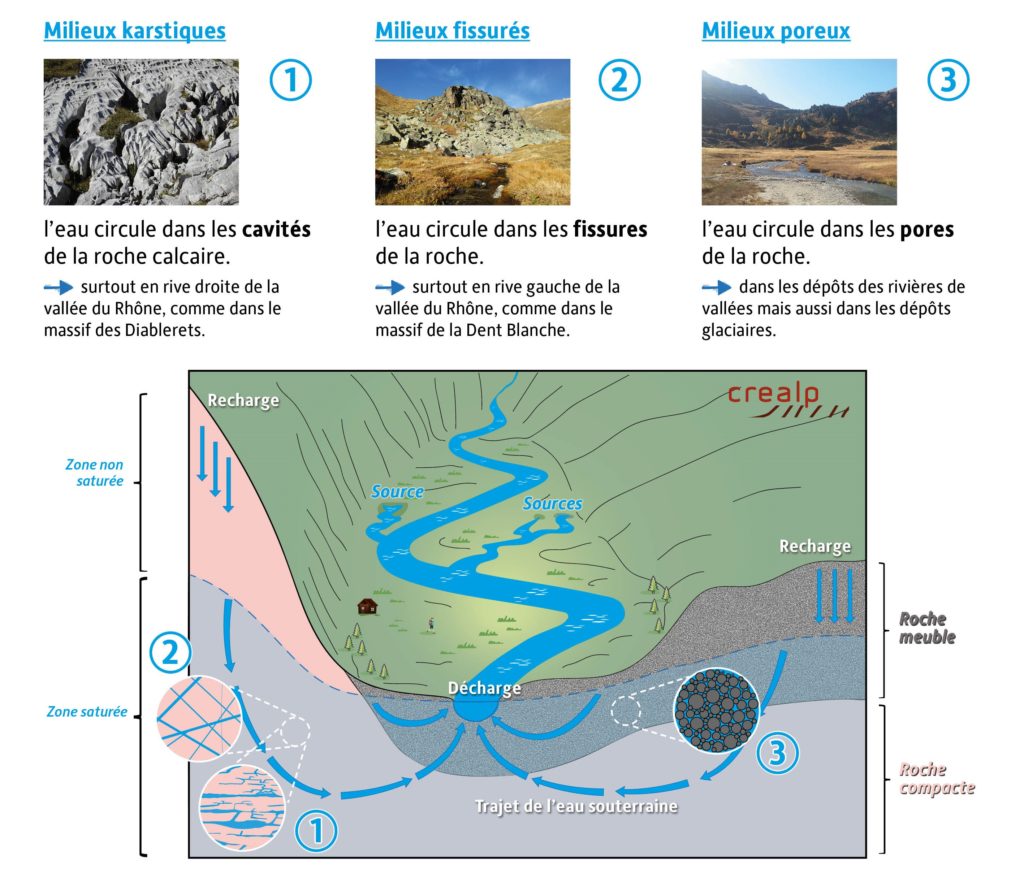
Figure: Schematic cross-section of an Alpine valley showing the aquifers. Generally speaking, valley-floor aquifers are porous (3), whilst the bedrock aquifers on which they lie are fissured or, in some cases, karstic (1).
And what role does groundwater play in the water cycle?
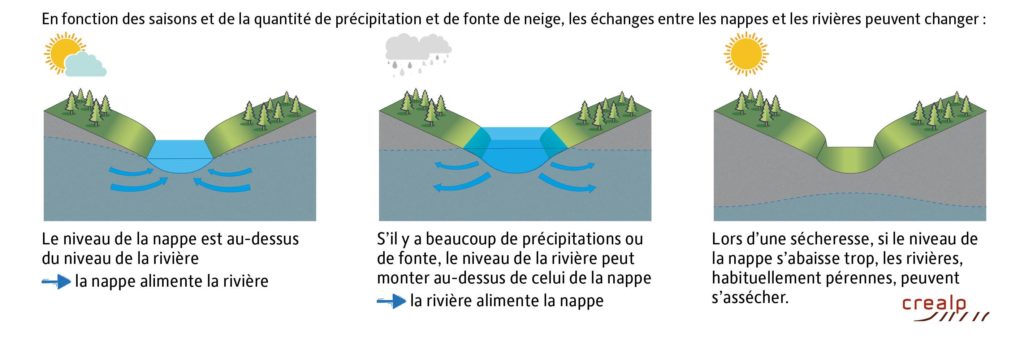
Groundwater is an essential component of the water cycle. Indeed, the infiltration of water into the ground slows its flow downstream. This slowing down is crucial for maintaining river flow during periods of drought or in winter.
For further information: What is groundwater? and How do rivers form?
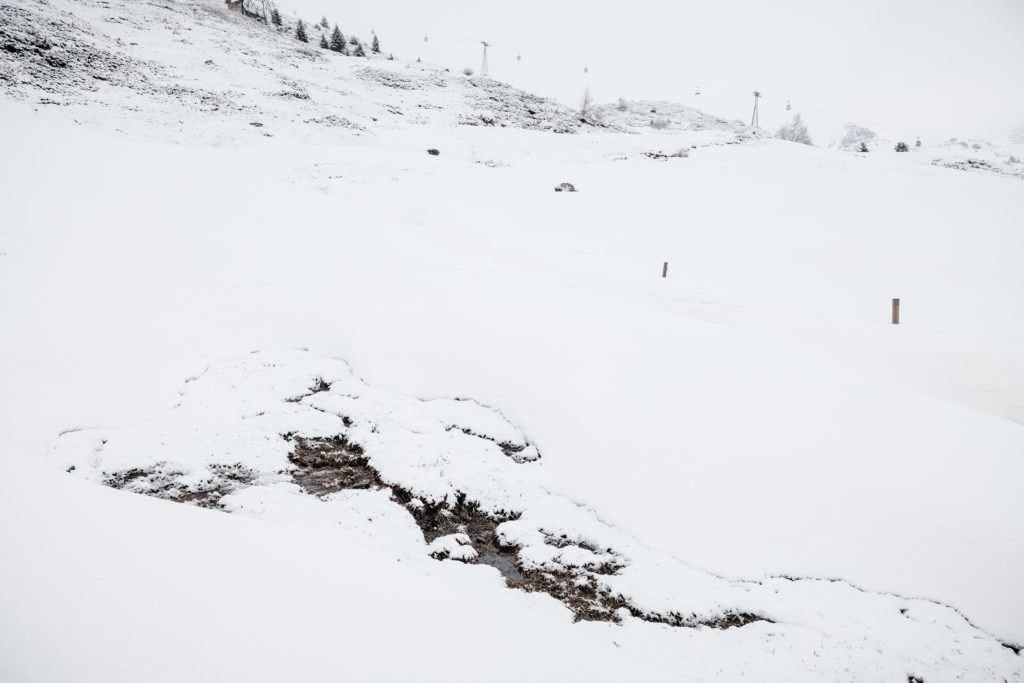
Interview with Tristan Brauchli (Hydrologist, CREALP/HES)
Climate change in the mountains
The expected changes are:
- Rising average annual temperatures
- Average annual rainfall remains stable, but there is a shift in seasonal patterns, with more rainfall in winter and less in summer, as well as more episodes of heavy
What are the consequences of climate change in the mountains?
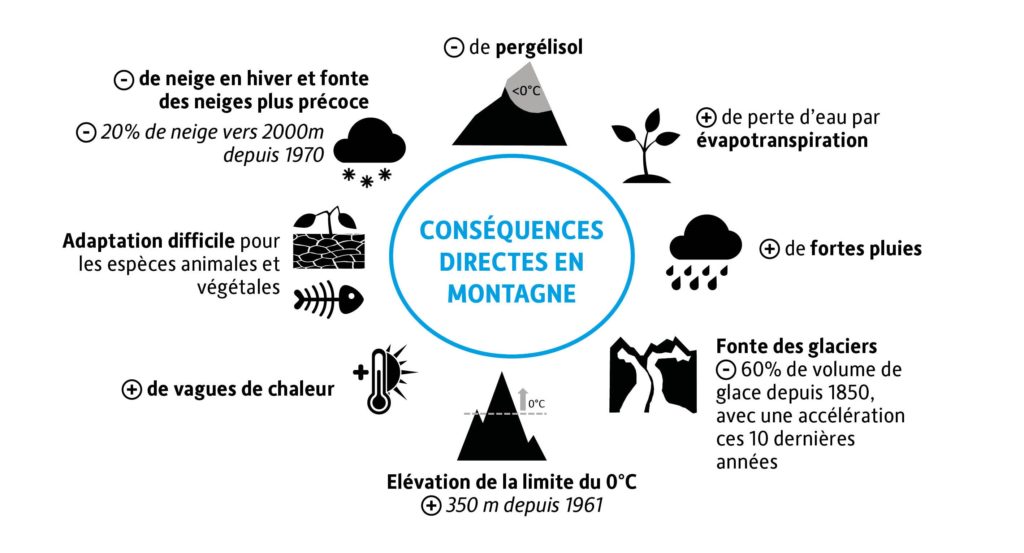
How will rivers respond to these changes? According to the Hydro-CH2018 report, it is currently estimated that around 40% of the annual flow in Alpine rivers comes from snowmelt. Without climate protection (pessimistic scenario), the proportion of snowmelt could decrease, in some cases by as much as 78%. Consequently, in future, the seasonal pattern of Alpine river flows will change, with an increase in winter and a significant decrease in summer.
And finally, what about groundwater in all this? Groundwater is also affected by climate change. It follows the same trends as rivers and will similarly undergo changes in its seasonal cycle. However, these changes will be slower than for rivers and will depend on the type of aquifer through which it flows.
You can find more information here: Climate change in the mountains and The impacts of climate change in mountain regions.
Water-related natural hazards
With climate change, water-related natural hazards in mountainous areas are likely to become more frequent:
- Extreme rainfall events increase the risk of flooding and erosion;
- The degradation of permafrost increases slope instability and the risk of rockfalls;
- The greater volume of mobilisable sediment resulting from glacier retreat and permafrost degradation increases the risk of debris flows.
For more information on natural hazards: A walk through the Mattertal valley and on natural hazards in the context of climate change: Management and adaptation: water-related natural hazards.
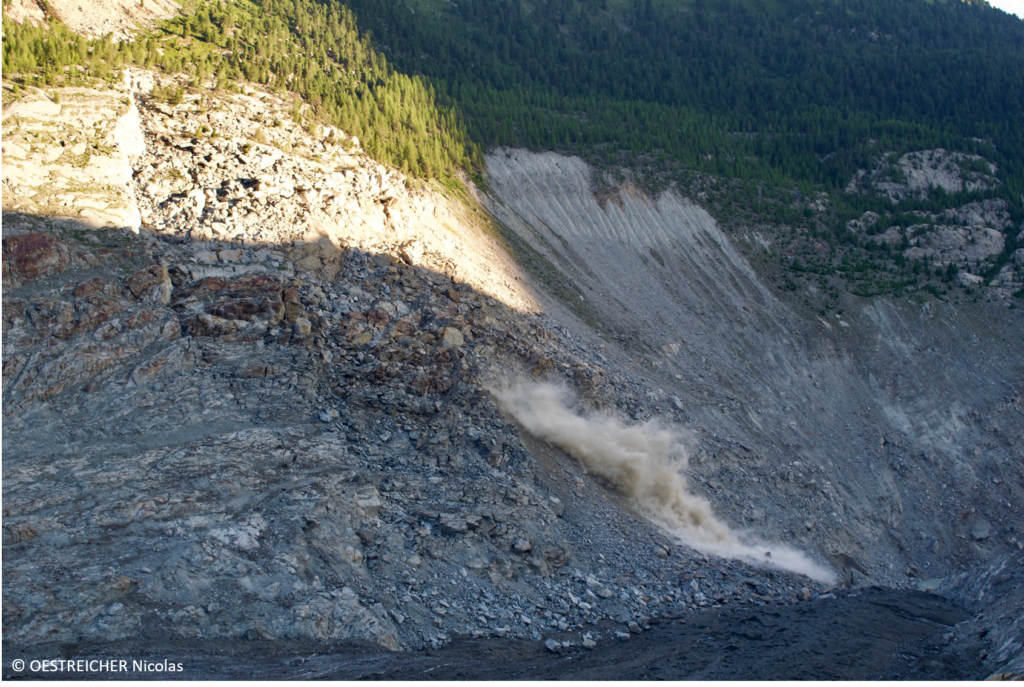
“A minor rockslide on the Moosfluh landslide.”
Interview with Raphael Corthay (Valais mountain guide)
Our relationship with water
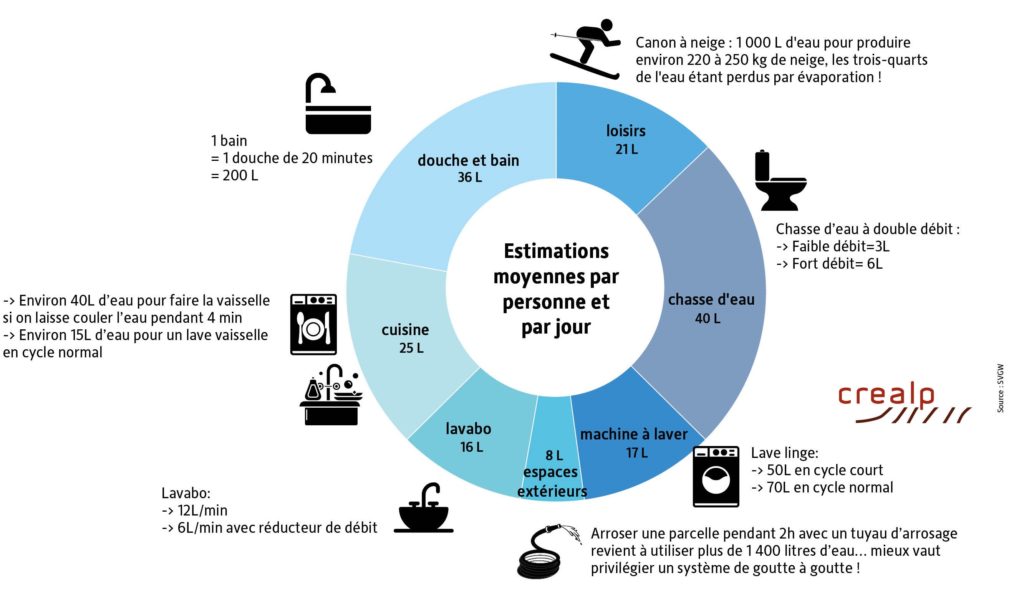
Water is a multifunctional resource that is essential not only for life, but also for the environment and society. It is used in many sectors, such as industry, agriculture, tourism and energy production, and is affected by numerous other human activities. In Switzerland, each person consumes around 162 litres of water per day, plus 4,200 litres of virtual water (water used in the production of consumer goods).
Water is often a source of conflict, both in Valais and elsewhere in the world. Valais’s 188 bisses stand as physical reminders of past disputes… Climate change is putting even greater pressure on this resource. It is up to us to promote integrated water resource management, taking into account all needs and the entirety of the catchment areas.
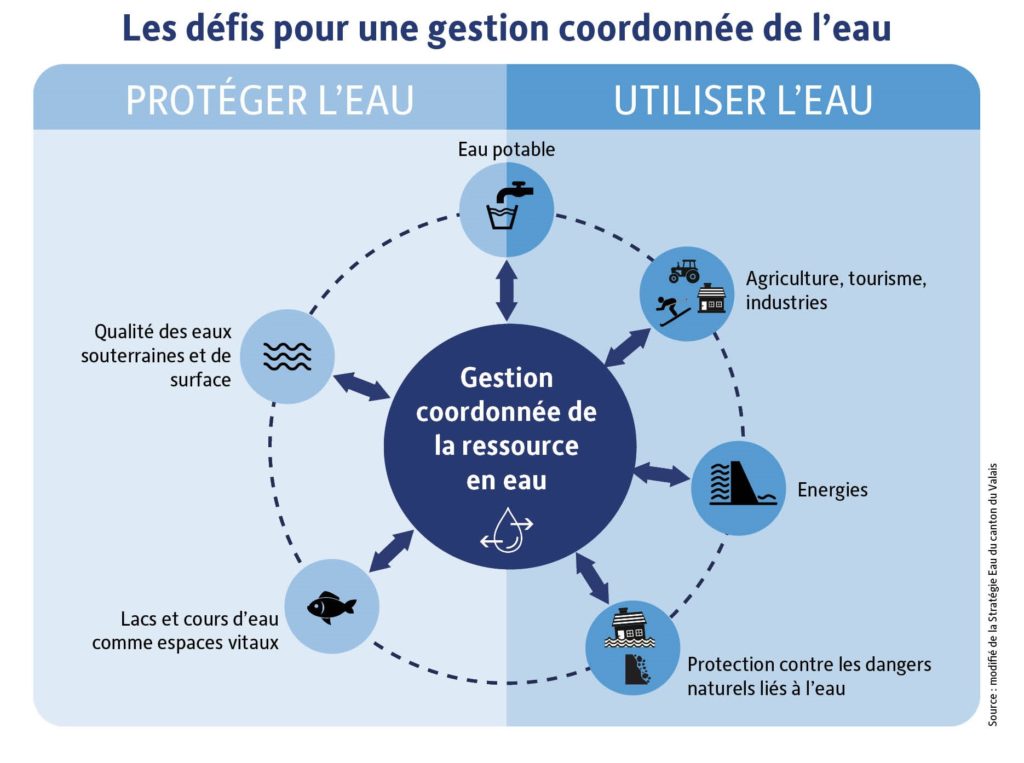
For more information on water management: Management and Adaptation: Water and the Challenges It Poses; and on our water consumption: Water and Us.
The information presented here is the result of years of scientific research and a consensus among scientists. You can find more information about the scientific method here: The scientific method.
Interview with Gerard Puippe (Water Engineer at ALTIS)
References for the text and figures :
Contact : Marie Arnoux (marie.arnoux@crealp.vs.ch)